8 Critical Things to Know Before Building a Tiny Home in Perth, WA
Building a tiny home or modular secondary dwelling in Perth is no longer just a lifestyle trend — it is a strategic property decision.
Whether your goal is to:
Increase rental income
Create multi-generational living
Add a private studio or guest house
Improve long-term property value
The most important factor is not design — it is understanding Western Australia’s planning and building regulations.
Below is a practical compliance guide based on WA rules to help you assess whether your property is suitable — and how QT Modular Homes delivers fully compliant modular solutions.
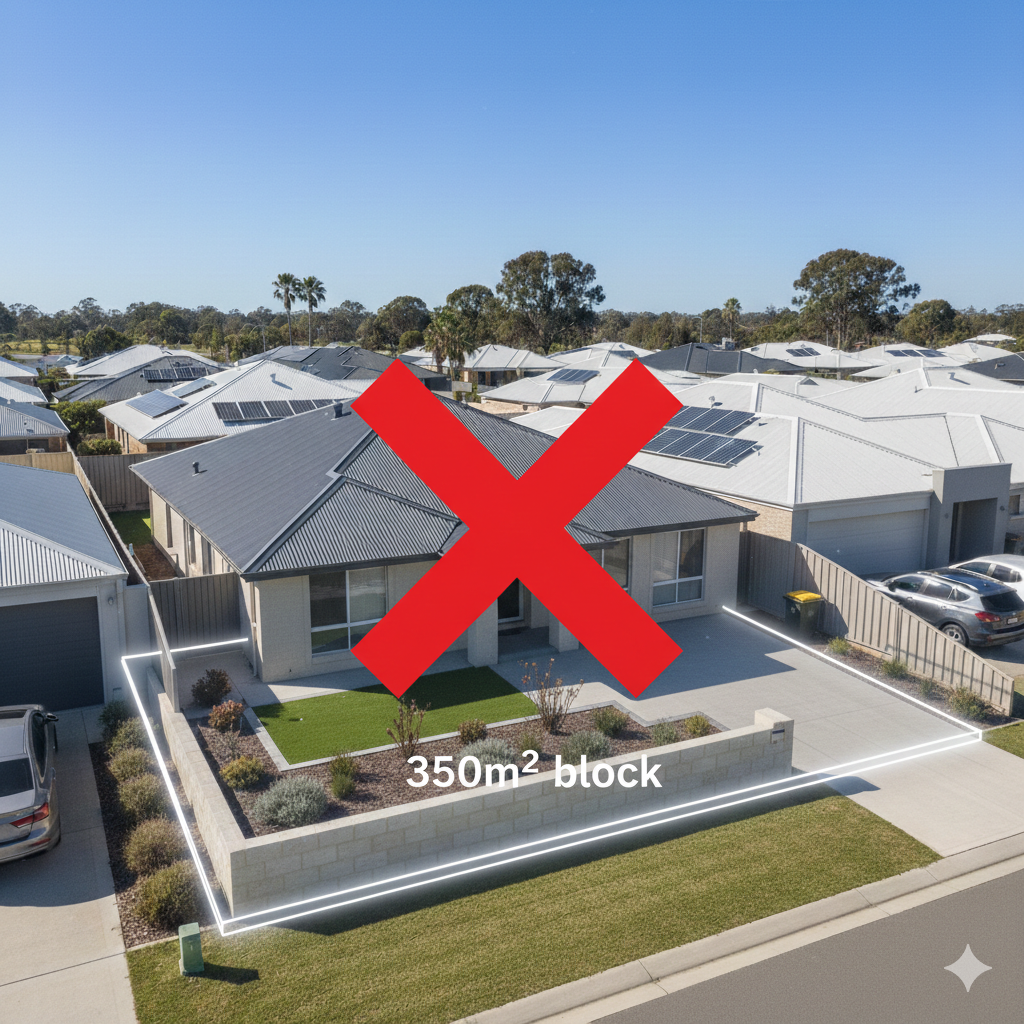
1️⃣ There Is No “Magic 350m² Rule” — But Density Still Matters
Previously, many homeowners believed a block needed to be at least 350m² to build a secondary dwelling.
This is no longer a strict rule.
What actually matters is your property’s R-Code density classification under Western Australia’s Residential Design Codes (R-Codes).
Every residential lot in WA has a density code (such as R20, R30, R40, etc.), and this determines:
Minimum lot size
Maximum site cover
Setback requirements
Open space requirements
Building height limits
Your ability to build a tiny home depends on how your proposed structure fits within these R-Code requirements — not a fixed land size threshold.
2️⃣ Zoning Determines If You Can Build an Ancillary Dwelling
Before choosing a design, you must confirm:
Is your property zoned residential?
In most residential zones across Perth, ancillary dwellings (secondary dwellings) are permitted, provided they comply with R-Codes.
However, zoning overlays, strata titles, or local planning policies may introduce additional conditions.
Key question to ask your local council:
“Is an ancillary dwelling permitted under my zoning classification?”
Without zoning eligibility, no design will proceed.
3️⃣ The 70m² Threshold – Why It’s Strategically Important
Across Western Australia, ancillary dwellings under 70m² may not require separate Planning Approval, provided they comply with R-Codes.
This is why modular designs between 60m²–68m² are highly popular.
Potential benefits of staying under 70m²:
Reduced approval timeframe
Avoidance of full planning assessment (in many councils)
Lower administrative costs
Faster construction commencement
However, exemption only applies if:
Setbacks are compliant
Site cover limits are respected
Zoning permits ancillary dwellings
Height limits are met
Always confirm with your local council, as interpretations can vary.
4️⃣ No Planning Approval Does NOT Mean No Building Permit
A common misconception in Perth:
“If it’s under 70m², I don’t need approval.”
Incorrect.
Under WA legislation, all habitable residential structures require a Building Permit.
The Building Permit ensures compliance with:
National Construction Code (NCC 2022)
Structural integrity standards
Fire separation rules
Energy efficiency requirements
Bushfire attack level (BAL) compliance (if applicable)
QT Modular Homes are:
Certified for use in Australia
Built to NCC 2022 standards
Classified as Class 1A residential buildings
Constructed with materials compliant with Australian Standards
This ensures eligibility for formal Building Permit approval in Western Australia.
5️⃣ Site Cover – The Most Common Approval Failure
Site cover refers to the percentage of land that can be covered by buildings.
Example:
400m² block
Maximum site cover = 50%
Maximum building footprint allowed = 200m²
If your existing house already covers 180m², you may only have 20m² remaining.
Site cover percentages vary by R-Code density:
R20 often around 50%
Higher density codes may allow more
Exceeding site cover limits is one of the most common reasons tiny home applications are rejected.
Always calculate your total existing footprint before selecting a modular design.
6️⃣ Setbacks & Boundary Requirements Still Apply
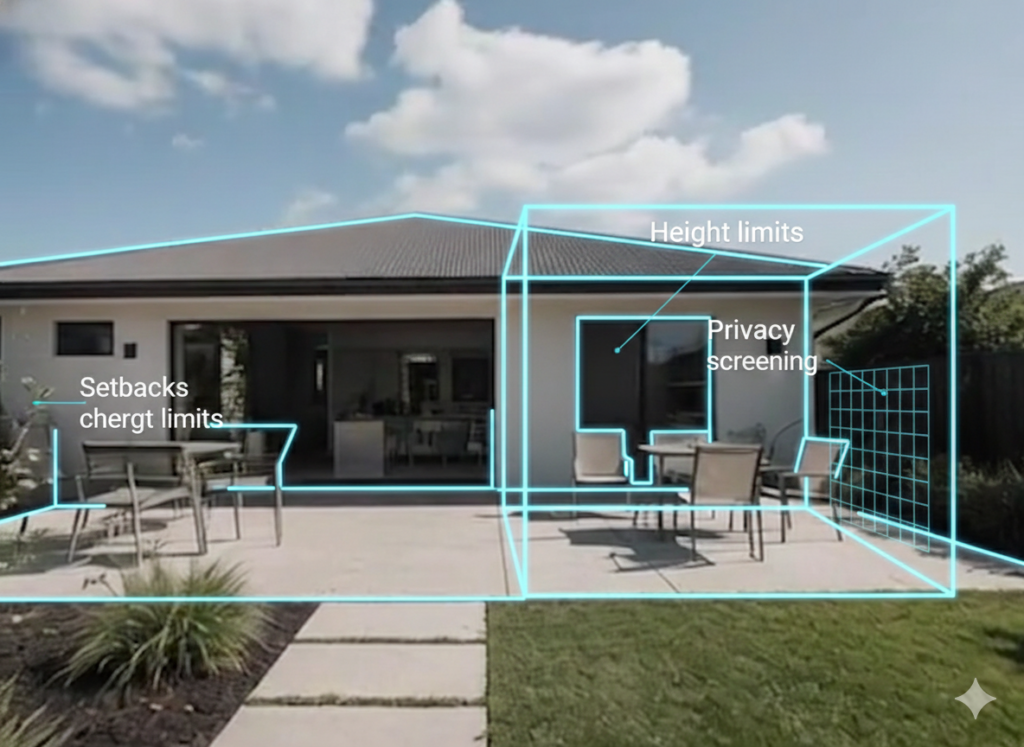
Even if your block size is suitable, your design must comply with setback requirements.
Typical WA R-Code setback principles:
Side boundary setbacks often between 1m–1.5m (depending on wall height)
Rear setbacks vary based on zoning and lot size
Height restrictions commonly around 4m for ancillary dwellings
Must not obstruct neighbour light or ventilation
If the modular home cannot physically fit within these setback rules, approval will not be granted.
Access is also critical.
If crane lifting is required to position modules over the existing house, feasibility must be assessed.
If access is restricted, panelised (flatpack) construction may be an alternative.
7️⃣ Local Councils Can Interpret Rules Differently
Although WA follows State R-Codes, each local government may apply:
Local Planning Policies
Bushfire overlays
Parking requirements
Heritage overlays
Special area controls
For example, the City of Stirling may interpret ancillary dwelling placement differently than the City of Canning.
The 70m² principle is consistent statewide — but implementation can vary.
Always verify directly with your local planning department.

8️⃣ Modular Homes Are Not Temporary Structures
There is still confusion in the market.
A properly engineered modular home is not a temporary structure or caravan.
QT Modular Homes are:
Engineered structural steel frame systems
Built to NCC 2022 compliance
Certified as Class 1A residential buildings
Energy-efficiency approved
Covered by structural warranty
This means they are legitimate residential dwellings — fully compliant under Australian law.
Building a Tiny Home in Perth Is About Compliance, Not Loopholes
Success comes from:
Understanding WA planning regulations
Respecting R-Code density requirements
Ensuring full NCC compliance
Designing within site cover limits
Confirming zoning eligibility
It is not about bypassing rules — it is about building correctly.
Self-Check Compliance Checklist Before Building
Before committing to a modular or tiny home in Perth, confirm:
✔ Is your zoning residential and does it permit ancillary dwellings?
✔ What is your R-Code density classification?
✔ What is your maximum site cover percentage?
✔ Does your proposed design stay under 70m² (if aiming for simplified pathway)?
✔ Can you meet setback requirements?
✔ Is there suitable access for installation?
✔ Have you contacted your local council planning department?
✔ Are you prepared to apply for a Building Permit?
If you can answer these clearly, your project is positioned for approval success.
Final Thought
Building a modular or tiny home in Perth is not just about adding space — it is about making an informed property decision.
When properly designed and compliant, a secondary dwelling can:
Increase property value
Improve rental yield
Provide flexible living options
Future-proof your land
QT Modular Homes are engineered and certified for Australian conditions — ensuring your project aligns with WA planning and building standards.