Modular Homes Floor Construction
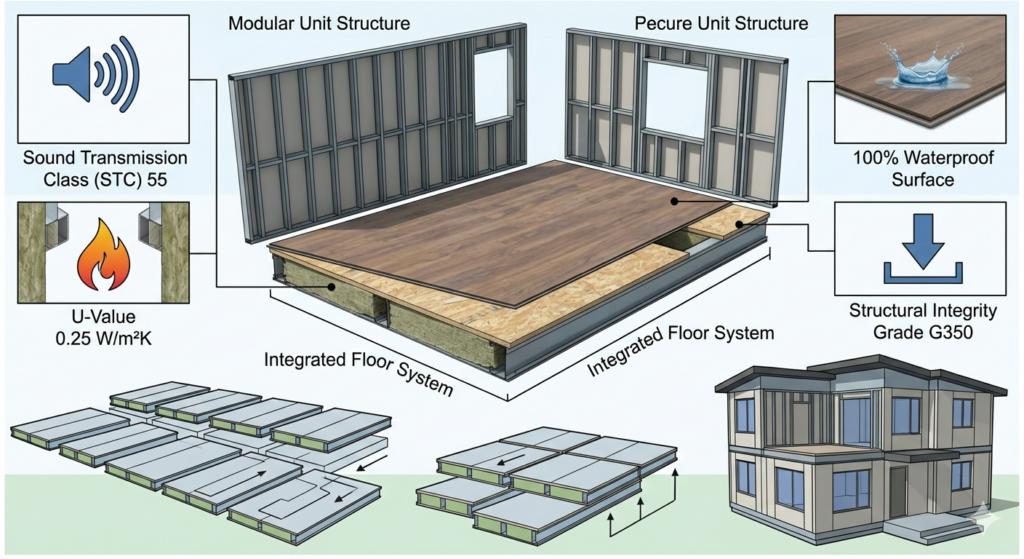
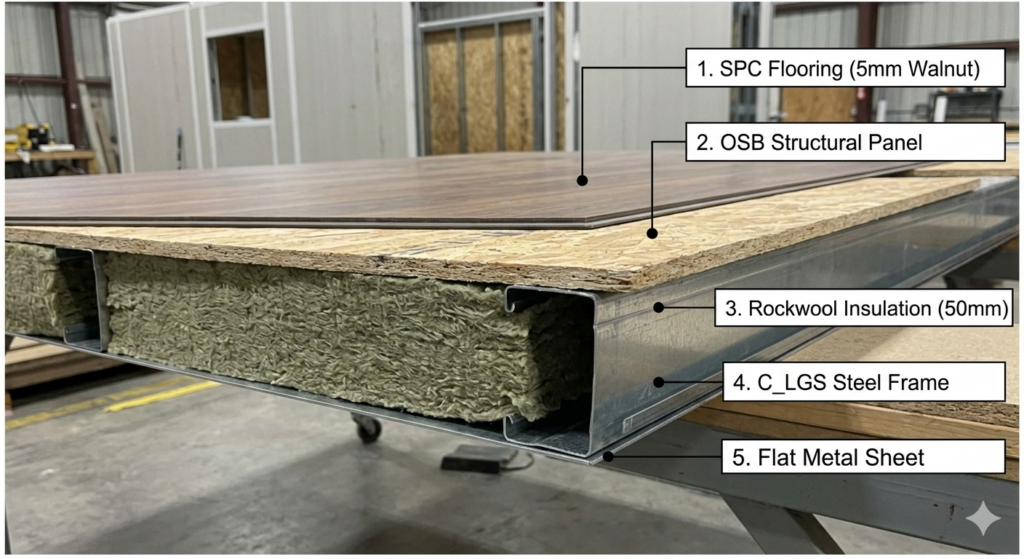
In modular construction, the floor system forms the structural base of the building and plays a critical role in load distribution, thermal insulation, moisture protection, and interior comfort. The modular floor assembly used in this system combines SPC flooring, structural OSB panels, Rockwool insulation, and Light Gauge Steel framing to create a durable and efficient foundation for modular homes.
This engineered floor structure is designed to deliver high structural strength, sound insulation, and long-term durability, making it suitable for modern modular homes, prefab houses, and compact living spaces.
Floor Structure Layers
The floor system consists of several layers arranged from top to bottom, each serving a specific structural and performance function.
- SPC Flooring (Stone Plastic Composite)
The finished surface of the floor is SPC flooring, a high-performance material widely used in modern residential construction.
Key advantages include:
- 100% waterproof surface
- High resistance to scratches and wear
- Easy installation and maintenance
- Modern aesthetic finishes
According to the material specification, the SPC flooring used has a 5mm thickness and walnut color finish, providing both durability and visual appeal.
- OSB Structural Panel
Below the flooring layer is an OSB (Oriented Strand Board) structural panel, which distributes loads across the steel frame and improves the overall rigidity of the floor.
OSB panels are commonly used in modular construction due to their:
- High structural stability
- Good load-bearing capacity
- Consistent performance under structural stress
Typical OSB panels used in the system are available in 9mm, 12mm, or 15mm thickness with a size of 1220 × 2440mm.
- Rockwool Insulation
A layer of Rockwool insulation is installed within the steel floor framing to improve both thermal and acoustic performance.
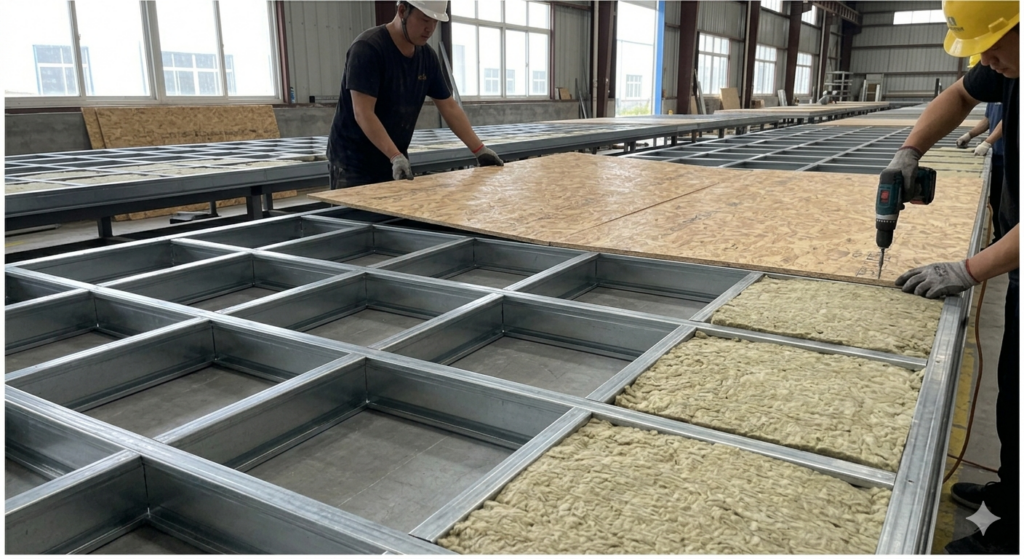
This insulation provides:
- Thermal insulation to reduce heat transfer from the ground
- Acoustic insulation to reduce vibration and noise
- Fire resistance, increasing building safety
The Rockwool specification includes 48kg/m³ density and 50mm thickness panels sized 600 × 1200mm.
- C_LGS Steel Frame (Light Gauge Steel)
The structural base of the floor is formed by a Light Gauge Steel (LGS) frame, manufactured from galvalume steel AZ80–AZ120 with G350 strength grade.
Typical profiles include:
- 90 × 41 × 1.2 mm
- 150 × 41 × 1.2 mm
This steel framing system offers:
- High structural strength
- Resistance to termites and moisture damage
- Precision manufacturing suitable for modular construction
- Long-term durability.
- Flat Metal Sheet (Bottom Protective Layer)
The underside of the floor structure is protected by a flat metal sheet, which shields the system from external elements and enhances structural integrity.
This bottom layer helps:
- Protect the floor from moisture and environmental exposure
- Increase durability of the modular floor assembly
- Provide additional structural reinforcement.
Benefits of the Modular Floor System
This engineered modular floor assembly provides several key advantages:
- Strong load-bearing capacity
- Improved thermal insulation from ground temperature
- Enhanced acoustic comfort inside the home
- Excellent moisture protection
- Durable and low-maintenance construction
The combination of SPC flooring, Rockwool insulation, OSB panels, and Light Gauge Steel framing creates a reliable floor structure designed for modern modular housing systems.